|

|

|
Font Size:
|
||||
|

|

|
||||
|
MEPS HC 254F: 2024 Outpatient Department VisitsJune 2026 Agency for Healthcare Research and Quality
A. Data Use Agreement A. Data Use AgreementIndividual identifiers have been removed from the microdata contained in these files. Nevertheless, under Sections 308 (d) and 903 (c) of the Public Health Service Act (42 U.S.C. § 242m and 42 U.S.C. § 299a-1), data collected by the Agency for Healthcare Research and Quality (AHRQ) and/or the National Center for Health Statistics (NCHS) may not be used for any purpose other than the purpose for which they were supplied; any effort to determine the identity of any reported cases is prohibited by law. Therefore, in accordance with the previously referenced federal statute, it is understood that
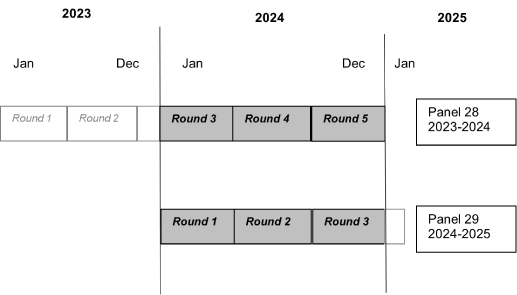
By using these data you signify your agreement to comply with the previously stated statutorily based requirements with the knowledge that deliberately making a false statement in any matter within the jurisdiction of any department or agency of the federal government violates Title 18, Part 1, Chapter 47, Section 1001 (18 U.S.C. § 1001), and is punishable by a fine of up to $10,000 or up to 5 years in prison. AHRQ requests that users cite AHRQ and the Medical Expenditure Panel Survey as the data source in any publications or research based on these data. B. Background1.0 Household ComponentThe Medical Expenditure Panel Survey (MEPS) provides nationally representative estimates of healthcare use, expenditures, payment sources, and health insurance coverage for the U.S. civilian noninstitutionalized population. The MEPS Household Component (HC) also provides estimates of respondents’ health status, demographic and socio-economic characteristics, employment, access to care, and satisfaction with care. Estimates can be produced for individuals, families, and selected population subgroups. The survey’s panel design includes five rounds of interviews spanning 2 full calendar years. The interviews use computer-assisted personal interviewing (CAPI) technology or computer-assisted video interviewing (CAVI) technology to collect information about each household member, which the survey builds on from interview to interview. A single household respondent reports all data for a sampled household. The MEPS HC was initiated in 1996. Each year, a new panel of sampled households is selected. Because the data collected are comparable to those from earlier medical expenditure surveys conducted in 1977 and 1987, it is possible to analyze long-term trends. Historically, each annual MEPS HC sample consists of up to 15,000 households. Data can be analyzed at the person, family, or event level. Data must be weighted to produce national estimates. The set of households selected for each MEPS HC panel is a subsample of households participating in the previous year’s National Health Interview Survey (NHIS) conducted by the NCHS. The NHIS sampling frame provides a nationally representative sample of the U.S. civilian noninstitutionalized population. In 2006, NCHS implemented a new NHIS sample design that included households with Asian persons in addition to households with Black and Hispanic persons in minority group oversampling. In 2016, NCHS introduced another sample design that discontinued the oversampling of these minority groups. 2.0 Medical Provider ComponentWhen the household CAPI instrument is completed and permission is obtained from the sampled members to contact their medical provider(s), a sample of these providers is contacted by telephone to obtain information that household respondents cannot accurately provide. This part of MEPS is called the Medical Provider Component (MPC), and it collects information on dates of visits, diagnosis and procedure codes, and charges and payments. The Pharmacy Component (PC), a subcomponent of the MPC, does not collect data on charges or on diagnosis and procedure codes, but it does collect detailed information on drugs, including the National Drug Code (NDC) and medicine name, as well as payment amounts. The MPC is not designed to yield national estimates; it is primarily used as an imputation source to supplement or replace household-reported expenditure information. 3.0 Survey Management and Data CollectionMEPS HC and MPC data are collected under the authority of the Public Health Service Act. The MEPS HC data are collected under contract with Westat, and the MEPS MPC data are collected under contract with RTI International. Datasets and summary statistics are edited and published in accordance with the confidentiality provisions of the Public Health Service Act and the Privacy Act. NCHS provides consultation and technical assistance. As soon as the MEPS data are collected and edited, they are released to the public in stages of microdata files and tables via the MEPS website and AHRQ Data Tools site. Additional information on MEPS is available from the MEPS project manager or the MEPS public use data manager at the Center for Financing, Access and Cost Trends, AHRQ, 5600 Fishers Lane, Rockville, MD 20857. C. Technical and Programming Information1.0 General InformationThis documentation describes one in a series of public use files (PUFs) from the 2024 MEPS HC and MPC. It was released as an ASCII data file (with related SAS, SPSS, R, and Stata programming statements and data user information), SAS dataset, SAS transport file, Stata dataset, and Excel file. The 2024 Outpatient Department Visits PUF (hereafter referred to as the OP PUF) provides detailed information on outpatient visits for a nationally representative sample of the U.S. civilian noninstitutionalized population. Data from the OP PUF can be used to estimate outpatient utilization and expenditures for calendar year 2024. The file contains 57 variables and has a logical record length of 309 with an additional 2-byte carriage return/line feed at the end of each record. This PUF consists of MEPS survey data obtained in (1) the 2024 portion of Round 3 and all of Rounds 4 and 5 for Panel 28, and (2) Rounds 1 and 2 and the 2024 portion of Round 3 for Panel 29 (i.e., the rounds for the MEPS panels covering calendar year 2024), as illustrated in the following figure. Figure 1 Portions of MEPS Panel 28 and Panel 29 Survey Data Included on the 2024 OP PUF
Each record on this PUF represents a unique outpatient event; that is, an outpatient event reported by the household respondent. Outpatient events reported in Panel 28 Round 5 and Panel 29 Round 3 and known to have occurred after December 31, 2024, are not included on this PUF. Annual counts of outpatient visits are based entirely on household reports. Information from the MEPS MPC is used to supplement expenditure and payment data reported by the household and does not affect use estimates. Data from this event PUF can be merged with other 2024 MEPS HC PUFs, to append person-level data, such as demographic characteristics or health insurance coverage, to each outpatient visit record. This PUF can also be used to construct summary variables for expenditures, sources of payment, and related aspects of outpatient visits. Aggregate annual person-level information on the use of outpatient departments and other health services is provided on the MEPS 2024 Full Year Consolidated Public Use File (hereafter referred to as the Consolidated PUF), in which each record represents a MEPS sampled person. This document offers an overview of the types and levels of data provided, as well as the content and structure of the PUF and codebook. It contains the following sections:
Any variables not on this PUF but released in previous years’ PUFs may have been excluded because they contained only missing data. For more information on the MEPS HC sample design, see Chowdhury et al. (2019). For information on the MEPS MPC design, see RTI (2025). Copies of the HC and the MPC survey instruments used to collect the information on the OP PUF are available in the Survey Questionnaires section of the MEPS website. 2.0 Data File InformationThe 2024 OP PUF consists of one event-level file, which contains characteristics associated with the outpatient event and imputed expenditure data. The 2024 OP PUF contains 22,150 outpatient event records; of these, 21,956 are associated with persons who have a positive person-level weight (PERWT24F). This PUF includes outpatient event records for all household members residing in eligible responding households who reported at least one outpatient event. Questions asked whether someone in the family had a visit to an independent lab or testing facility for x-rays or other tests. An affirmative answer to these questions led to the creation of an office-based provider event record or an outpatient department event record. Each record represents one household-reported outpatient event that occurred during calendar year 2024. Outpatient visits known to have occurred before January 1, 2024, or after December 31, 2024, are not included on this PUF. Some household members may have multiple outpatient events and thus will be represented in multiple records on this PUF. Conversely, other household members may have had no outpatient events reported and thus will have no records on this PUF. These data were obtained from the MEPS HC in (1) the 2024 portion of Round 3 and all of Rounds 4 and 5 for Panel 28, and (2) Rounds 1 and 2 and the 2024 portion of Round 3 for Panel 29. The persons represented on this PUF had to meet either of the following criteria:
Persons with no outpatient visit events for 2024 are not included on this event-level OP PUF but are represented on the person-level 2024 Consolidated PUF. Each outpatient visit record includes the following information: date of the visit, whether the household member saw the doctor, type of care received, type of services (e.g., lab test, sonogram or ultrasound, x-rays) received, medicines prescribed during the visit, flat fee information, imputed sources of payment, total payment and total charge, a full-year person-level weight, variance strata, and variance primary sampling unit (PSU). To append person-level information, such as demographic characteristics or health insurance coverage, to each event record, data from this PUF can be merged with 2024 MEPS HC person-level data (i.e., the Consolidated PUF) using the DUPERSID person identifier (see Section C.2.5.1 for more information on the DUPERSID identifier). Outpatient visit events in this PUF can also be linked to HC 254: MEPS 2024 Medical Conditions Public Use File (hereafter referred to as the Conditions PUF). Please see Section C.5.0 or HC 254I: Appendix to the MEPS2024 Event Files (hereafter referred to as the Appendix PUF) for details on how to merge MEPS data files. 2.1 Codebook StructureFor most variables on the OP PUF, both weighted and unweighted frequencies are provided in the accompanying codebook file. The exceptions to this are weight variables and variance estimation variables. Only unweighted frequencies of these variables are included in the accompanying codebook file. See the Weight Variables list in the appendix. The codebook and data file list variables in the following order:
The person identifier corresponds to a unique person, and the outpatient event identifier corresponds to a unique event. 2.2 Reserved CodesThis OP PUF contains several reserved code values (Table 1).
The value Cannot be Computed (-15) is assigned to MEPS constructed variables when there was not enough information from the instrument to calculate the constructed variables. Not enough information is often the result of skip patterns in the data or of missing information stemming from the responses Refused (-7) or Don’t Know (-8). Note that, in addition to Don’t Know, reserved code -8 also includes cases for which the information from the question was not ascertained. Generally, values of -1, -7, -8, and -15 for non-expenditure variables have not been edited in this PUF. Analysts who would like to recode these values can find skip patterns in the HC survey questionnaire located on the MEPS website. 2.3 Codebook FormatThe OP PUF codebook describes an ASCII dataset (although the data are also provided in a SAS dataset, SAS transport file, Stata dataset, and Excel file) and provides the programming identifiers for each variable (Table 2).
2.4 Variable Source and Naming ConventionsIn general, variable names reflect the variable’s content. All edited or imputed variables end with “X”. As the collection, universe, or categories of variables were altered, variable names have been appended with “_Myy”, where “yy” indicates the collection year in which the alterations were made. Such alterations are described in detail throughout this document. 2.4.1 Variable-Source CrosswalkVariables on this OP PUF were derived from the CAPI or the MPC data collection instrument, or were assigned in sampling. The source of each variable is identified in the appendix in one of four ways:
2.4.2 Expenditure and Source of Payment VariablesThe names of the expenditure and source of payment variables follow a standard convention and end in “X”, indicating that they were edited or imputed. Please note that imputed means that a series of logical edits, and an imputation process to account for missing data, were performed on the variable. The total sum of payments and the 10 sources of payment variables are named using the following approaches. The first two characters indicate the type of event: IP = inpatient stay ER = emergency room visit HH = home health visit OM = other medical equipment OB = office-based visit OP = outpatient visit DV = dental visit RX = prescribed medicine For expenditure variables in the OP PUF, the third character indicates whether the expenditure (or amount paid) is associated with the facility (F) or the physician (D). The fourth and fifth characters indicate the source of payment: SF = self or family MR = Medicare MD = Medicaid PV = private insurance VA = Veterans Administration/CHAMPVA TR = TRICARE OF = other federal government SL = state/local government WC = workers’ compensation OT = other insurance XP = sum of payments In addition, the total charge variable is indicated by “TC” in the variable name. The sixth and seventh characters (24) indicate the year. The eighth character, “X”, indicates that the variable was edited or imputed. For example, the variable OPFSF24X is the edited/imputed amount paid by self or family for the facility portion of the outpatient visit expenditure incurred in 2024. 2.5 File Contents2.5.1 Survey Administration VariablesPerson Identifiers (DUID, PID, DUPERSID) The definitions of dwelling units (DUs) in the MEPS HC are generally consistent with those used in NHIS. The dwelling unit identifier (DUID) is a seven-digit number consisting of a two-digit panel number followed by a five-digit random number assigned after the case was sampled for MEPS. A three-digit person number (PID) uniquely identifies each person within the DU. The variable DUPERSID is the combination of the variables DUID and PID. Identifiers begin with the two-digit panel number. For detailed information on DUs and families, please refer to the documentation for the Consolidated PUF. Record Identifiers (EVNTIDX, FFEEIDX) EVNTIDX uniquely identifies each outpatient event (i.e., each record on the OP PUF) and is required to link outpatient events to the Conditions PUF. EVNTIDX begins with the two-digit panel number and ends with the two-digit event type identifier. For details on linking see Section C.5.0 or the Appendix PUF. FFEEIDX is a constructed variable that uniquely identifies a flat fee group, which includes all events that were part of a flat fee payment. For example, if a patient receives stitches during an outpatient visit and comes back to have the stitches removed 10 days later in a follow-up outpatient visit, both visits are covered under one flat fee dollar amount. These two events (the initial outpatient visit and the subsequent outpatient visit) would have the same value for FFEEIDX. A “mixed” flat fee group could contain both outpatient and office-based visits. Only outpatient and office-based events are allowed in a mixed bundle. Please note that FFEEIDX should be used to link the outpatient and office-based events to determine the full set of events that are part of a flat fee group. Round Indicator (EVENTRN) EVENTRN indicates the round in which the outpatient event was reported. Please note that Rounds 3 (partial), 4, and 5 are associated with data collected from Panel 28. Rounds 1, 2, and 3 (partial) are associated with data collected from Panel 29. Panel Indicator (PANEL) PANEL is a constructed variable used to specify the panel number and indicates either Panel 28 or Panel 29 for each record on the PUF. Panel 28 started in 2023, and Panel 29 started in 2024. 2.5.2 MPC Data Indicator (MPCDATA)MPCDATA is a constructed variable that indicates whether MPC data were collected for the outpatient visit. Though all outpatient events are sampled into the MPC, not all outpatient event records have MPC data associated with them. This depends on the cooperation of the household respondent to provide permission forms to contact the outpatient facility, as well as the cooperation of the outpatient facility to participate in the survey. 2.5.3 Outpatient Visit Event VariablesThis PUF contains variables describing outpatient events reported by household respondents in the Outpatient Department section of the MEPS HC questionnaire. The questionnaire contains probes for determining details about the outpatient visit. These variables have not been edited. Visit Details (OPDATEYR-VSTRELCN_M18) When a person reported a visit to a hospital outpatient department or special clinic, the year and month of the outpatient visit (OPDATEYR and OPDATEMM) and whether the person saw or spoke to a medical doctor (SEEDOC_M18) were ascertained. If the person did not see a specialty doctor (DRSPLTY_M18), or a physician (i.e., medical doctor), the respondent was asked to identify the type of medical person who was seen (MEDPTYPE_M18). The type of care the person received (VSTCTGRY) and whether the visit was related to a specific condition (VSTRELCN_M18) were also determined. Note that response categories with small frequencies may have been recoded to other categories for confidentiality reasons. Services, Procedures, and Prescription Medicines (LABTEST_M18-MEDPRESC) Services received during the visit included whether the person received lab tests (LABTEST_M18), a sonogram or ultrasound (SONOGRAM_M18), x-rays (XRAYS_M18), a mammogram (MAMMOG_M18), an MRI or CAT scan (MRI_M18), an electrocardiogram or an electroencephalogram (EKG_M18), or a vaccination (RCVVAC_M18). Minimal editing was done across treatments, services, and procedures to ensure consistency across all values and their responses [-1 (Inapplicable), -7 (Refused), -8 (Don’t Know), and 95 (No Services Received)]. The respondent was asked whether a surgical procedure was performed during the visit (SURGPROC). All service and procedure variables are set to -1 (Inapplicable) for telehealth events. Finally, the questions asked if medicine was prescribed for the person during the visit (MEDPRESC). For a repeat visit event group, if a prescribed medicine is linked to the stem event (MEDPRESC = 1), then the value of MEDPRESC is copied to the leaf events without linking the leaf events to the prescribed medicine. MEDPRESC = 1 was recoded to -15 (Cannot be Computed) for all leaf events. See Section 2.5.5 for an explanation of “stem” and “leaf” events. Telehealth (TELEHEALTHFLAG, VISITTYPE) The Telehealth (TH) module is asked for all events tagged as TH events by the respondent. As part of the TH module, the respondent is asked whether the provider or facility is owned or operated by a hospital. Post collection, the response to this question is used to reclassify all TH events as either OB or OP. The TH module items were designed to align with existing OB and OP items to allow for reclassifying the event type. All events initially reported as TH also have a categorical variable, VISITTYPE, which indicates whether the visit was over the phone, through real-time video, or held some other way. 2.5.4 Clinical Classification Software RefinedInformation on household-reported medical conditions (ICD-10-CM condition codes) and aggregated clinically meaningful categories generated using Clinical Classification Software Refined (CCSR) for each outpatient visit are not provided on this PUF. For information on ICD-10-CM condition codes and associated CCSR codes, see the Conditions PUF. 2.5.5 Flat Fee Variables (FFEEIDX, FFOPTYPE)Definition of Flat Fee Payments A flat fee is the fixed dollar amount a person is charged for a package of healthcare services provided during a defined period. Examples are an obstetrician’s fee covering a normal delivery, as well as pre- and post-natal care; or a surgeon’s fee covering a surgical procedure along with post-surgical care. A flat fee group is a set of medical services (i.e., events) that are covered under the same flat fee payment. The flat fee groups represented on this OP PUF include flat fee groups where at least one of the healthcare events, as reported by the HC respondent, occurred during 2024. By definition, a flat fee group can span multiple years. Furthermore, a single person can have multiple flat fee groups. Certain flat fee bundle types reported by household respondents were identified as having a high likelihood of being simple events misidentified as bundle events. To address this, starting in 2021, HC-reported flat fee bundles were considered flat fees if the bundle consisted only of dental events. Other HC-reported bundles were not allowed as flat fee bundles, and events in these bundles were treated as simple events. HC-reported bundles that included a mix of emergency room and hospitalization events were treated as linked events. All emergency room expenditures were combined with hospital inpatient expenditures. However, provider-reported flat fee processing did not change under this update. Flat Fee Variable Descriptions Flat Fee ID (FFEEIDX) As previously noted, the variable FFEEIDX uniquely identifies all events within a person’s flat fee group. On any 2024 event PUF, every event that is part of a specific flat fee group has the same value for FFEEIDX. Note that prescribed medicine, other medical events, and home health events are never included in a flat fee group, so FFEEIDX is not a variable on those event PUFs. Flat Fee Type (FFOPTYPE) FFOPTYPE indicates whether the 2024 outpatient visit is the “stem” or “leaf” of a flat fee group. The stem of a flat fee group (i.e., records with FFOPTYPE = 1) is the initial medical service (event), which is followed by other medical events that are covered under the same flat fee payment. The leaves of the flat fee group (records with FFOPTYPE = 2) are any medical events that tie back to the stem in the flat fee group. These leaf records have their expenditure variables set to 0. For outpatient visits that are not part of a flat fee payment, the FFOPTYPE is set to Inapplicable (-1). Counts of Flat Fee Events that Cross Years Starting in 2021, HC-reported flat fee bundles were treated as flat fees only if the bundle consisted exclusively of dental events; other HC-reported bundles were not recognized as flat fee bundles. As a result, the variables describing flat fee events that cross years (FFBEFYY and FFTOTYY) contain no valid values and have been removed from the 2024 OP PUF. Caveats of Flat Fee Groups There are 119 outpatient visits that are identified as part of a flat fee payment group. In general, every flat fee group should have an initial visit (stem) and at least one subsequent visit (leaf). In some situations, however, this is not the case. For some of these flat fee groups, the initial visit occurred in 2024, but the remaining visits of the flat fee group occurred in 2025. In this case, the 2024 flat fee group represented on this PUF would consist of one event (the stem only). The 2025 leaf events that are part of this flat fee group would not be represented on this PUF. Similarly, the household respondent may have reported a flat fee group with the initial visit occurring in 2023 and subsequent visits occurring in 2024. In this case, the initial visit would not be represented on this PUF: This 2024 flat fee group would consist of one or more leaf records with no stem. Another reason a flat fee group would not have a stem but have at least one leaf record is that the stem or leaves could have been reported as different event types. Outpatient and office-based medical provider visits are the only two event types allowed in a single flat fee group. The stem may have been reported as an outpatient department visit, and the leaves may have been reported as office-based medical provider visits. Note that the appendix lists all possible flat fee variables. 2.5.6 Expenditure DataDefinition of Expenditures Expenditures in this PUF refer to payments for outpatient services. More specifically, expenditures in MEPS are defined as the sum of payments for care received for each outpatient visit, including out-of-pocket payments and payments made by private insurance, Medicaid, Medicare, and other sources. The definition of expenditures used in MEPS differs from its predecessors, the 1987 National Medical Expenditure Survey (NMES) and 1977 National Medical Care Expenditure Survey (NMCES), where charges rather than the sum of payments were used to measure expenditures. This change was adopted because charges became a less appropriate proxy for medical expenditures during the 1990s as a result of the increasingly common practice of discounting. Although measuring expenditures as the sum of payments incorporates discounts in the MEPS expenditure estimates, the estimates do not incorporate any payment not directly tied to specific medical care visits, such as bonuses or retrospective payment adjustments paid by third-party payers. Currently, charges associated with uncollected liability, bad debt, and charitable care (unless provided by a public clinic or hospital) are not counted as expenditures because there are no associated payments. Although charge data are provided on this PUF, analysts should use caution when working with these data because a charge does not typically represent actual dollars exchanged for services or the resource costs of those services, nor are the charge data directly comparable to the expenditures defined in the 1987 NMES. For details on expenditure definitions, please refer to Monheit, et al. (1999). AHRQ has developed factors to apply to the 1987 NMES expenditure data to facilitate longitudinal analysis. These factors are published in Zuvekas and Cohen (2002) and can also be accessed via the Center for Financing, Access and Cost Trends data center. For more information, see the Data Center section of the MEPS website. Expenditure data related to outpatient visits are broken out by facility and separately billing doctor (SBD) expenditures. When a facility bills directly for the services provided by physicians and other providers, in MEPS, the facility charge and payments include the physician and other providers’ charges and payments. This file contains six categories of expenditure variables per visit: basic hospital outpatient facility expenses; expenses for doctors who billed separately from the outpatient facility for any services provided during the outpatient visit; total expenses, which is the sum of the facility and physician expenses; facility charge; physician charge; and total charges, which is the sum of the facility and physician charges. If examining trends in MEPS expenditures, please refer to Section C.3.5 for more information. Data Editing and Imputation Methodologies of Expenditure Variables The expenditure data included in this PUF were derived from both the MEPS HC and the MPC. The MPC contacted medical providers identified by household respondents. The charge and payment data from medical providers were used in the expenditure imputation process to supplement missing household data. For all outpatient visits, MPC data were used if available; otherwise, HC data were used. Missing data for outpatient visits where HC data were not complete and MPC data were not collected, or where MPC data were not complete, were imputed. General Data Editing Methodology Logical edits were used to resolve internal inconsistencies and other problems in the HC and MPC data. The edits were designed to (1) preserve partial payment data from households and providers and (2) identify actual and potential sources of payment for each household-reported event. In general, these edits accounted for outliers, copayments, and charges reported as total payments. In addition, edits were implemented to correct for payment source misclassifications between Medicare and Medicaid, and between Medicare health maintenance organizations (HMOs) and private HMOs. These edits produced a complete vector of expenditures for some events and provided the starting point for imputing missing expenditures for the remaining events. Imputation Methodologies The predictive mean matching imputation method was used to impute missing expenditures. Based on events with completely reported expenditure data, this procedure used machine learning (ML) models1 to predict total expenses for each event. Then, for each event with missing payment information, a donor event with the closest predicted payment vector was used to impute the missing payment value. The predicted payment vector consists of predicted values of total payment and payments by payment source (of which there are 10 payment sources). Separate imputations were performed for flat fee and simple events, though there were no flat fee events in 2024. 1 ML models are like traditional ordinary least squares (OLS) models in that they have independent and dependent variables. Unlike OLS, however, ML models can use nonlinear functional forms, do not require functional forms to be specified a priori, and do not rely on restrictive modeling assumptions. ML models may also use multiple “lower-level” estimators (algorithms) to train a “higher-level” or meta-estimator (algorithm), which can lead to improved predictions and model performance. A weighted sequential hot-deck procedure was used to impute the missing total charges. This procedure uses survey data from donors to replace missing data and considers the donors’ weighted distribution in the imputation process, ensuring that the weighted distribution of recipients’ expenditures reflects the weighted distribution of the donors’ expenditures. Expenditures for services provided by SBDs in hospital settings were also edited and imputed. These expenditures are shown separately from hospital facility charges for hospital inpatient, outpatient, and emergency room care. Outpatient Visit Data Editing and Imputation Facility expenditures for outpatient services were developed in a sequence of logical edits and imputations. The household edits were applied to sources and amounts of payment for all events reported by HC respondents. MPC edits were applied to provider-reported sources and amounts of payment for records matched to household-reported events. Both sets of edits were used to correct obvious errors in expenditure reporting. After data from each source were edited, a decision was made whether to use household- or MPC-reported information in the final edits and predictive mean matching imputations for missing expenditures. In general, MPC data were used for events where a household-reported event corresponded to an MPC-reported event (i.e., a matched event) because providers usually have more complete and accurate data on sources and amounts of payment than households. One critical edit separated flat fee events from simple events. This edit was necessary because groups of events covered by a flat fee (i.e., a flat fee bundle) were edited and imputed separately from individual events, where each event is covered by a single charge (i.e., simple events). See Section C.2.5.5 for more details on flat fee groups. Logical edits were also used to sort each event into a specific category for the imputations. Events with complete expenditures were flagged as potential donors for the predictive mean matching imputations. Events with missing expenditure data were assigned to various recipient categories based on the extent of missing charge and expenditure data. For example, an event with a known total charge but no expenditure information was assigned to one category, whereas an event with a known total charge and partial expenditure information was assigned to a different category. Similarly, events without a known total charge and no or partial expenditure information were assigned to separate recipient categories. The logical edits produced eight recipient categories in which all events shared a common extent of missing data. However, for predictive mean matching imputations, the recipients were grouped into four categories based on the known status of total charge and the sources of payment: (1) known charge but unknown payment status of at least one potential paying source; (2) unknown charge and unknown payment status of at least one potential paying source; (3) known charge and known status of all payment sources; and (4) unknown charge and known status of all payment sources. Separate predictive mean matching imputations were performed on events in each recipient group. For outpatient events, the donor pool was restricted to events with complete expenditures from the MPC. To improve the reliability of imputation, current year donors and inflation-adjusted prior year donors are used for the predictive mean matching imputations. The donor pool included “free events” because, in some instances, providers are not paid for their services. These events represent charity care, bad debt, provider failure to bill, and third-party payer restrictions on reimbursement in certain circumstances. If free events were excluded from the donor pool, total expenditures would be overcounted because the distribution of free events among complete events (donors) would not be represented among incomplete events (recipients). For office-based and outpatient events, the donor pool also included events originally reported by providers as paid on a capitated basis. To obtain the fee-for-service (FFS) equivalent payments for these capitated events, a capitation imputation was implemented (see the next section). Once imputed with the FFS equivalent payments, these events became donors for all other incomplete events, and particularly for events reported by the household as services covered under managed care plans. Expenditures for services provided by SBDs in hospital settings were also edited and imputed. These expenditures are shown separately from hospital facility charges for hospital inpatient stays, outpatient visits, and emergency room visits. Capitation Imputation A weighted sequential hot-deck procedure was used to estimate expenditures at the event-level for events that were paid on a per-month per-person (capitated) basis. The capitation imputation procedure was designed as a reasonable approach to complete event-level expenditures for persons in non-FFS managed care plans. HMO events reported in the MPC as covered by capitation arrangements were imputed using similar completed HMO events paid on an FFS basis, with total charge as a key variable. Then, this fully completed set of MPC events was used in the donor pool for the main imputation process for cases in HMOs. By using this strategy, capitated HMO events were imputed as if the provider were reimbursed from the HMO on a discounted FFS basis. Imputation Flag (IMPFLAG) IMPFLAG is a six-category variable that indicates whether the event contains complete HC or MPC data, was fully or partially imputed, or was imputed in the capitated imputation process (for OP and OB events only). The following list identifies how the imputation flag is coded; the categories are mutually exclusive. IMPFLAG = 0; not eligible for imputation (includes zeroed out and flat fee leaf events) IMPFLAG = 1; complete HC data IMPFLAG = 2; complete MPC data IMPFLAG = 3; fully imputed IMPFLAG = 4; partially imputed IMPFLAG = 5; complete MPC data through capitation imputation Flat Fee Expenditures To count flat fees expenditures, the expenditure was placed on the first visit of the flat fee group, and the remaining visits were given zero facility payments, although physician’s expenditures may still be present. Thus, if the first visit in the flat fee group occurred before 2024, all events that occurred in 2024 would have zero payments. Conversely, if the first event in the flat fee group occurred at the end of 2024, the total expenditure for the entire flat fee group would be on that event, regardless of the number of events it covered after 2024. See Section C.2.5.5 for details on the flat fee variables. Zero Expenditures As noted previously, some respondents reported medical events with zero payments. This could occur if (1) the visit was covered under a flat fee arrangement (flat fee payments are included only on the first event covered by the arrangement); (2) there was no charge for a follow-up visit; (3) the provider was never paid directly by an individual, insurance plan, or other source for provided services; (4) the charges were included in another bill, or (5) the event was paid through government-funded or privately funded research or through clinical trials. Discount Adjustment Factor An adjustment was also applied to some HC-reported expenditure data because an evaluation of matched HC/MPC data showed that respondents who reported that charges and payments were equal were often unaware that insurance payments for the care had been based on a discounted charge. To compensate for this systematic reporting error, a weighted sequential hot-deck imputation procedure was implemented to determine an adjustment factor for HC-reported insurance payments when charges and payments were reported to be equal. For the other imputations, selected predictor variables were used to form groups of donor and recipient events for the imputation process. Sources of Payment In addition to total expenditures, variables are provided that itemize expenditures by major source of payment category:
Imputed Outpatient Expenditure Variables This PUF contains two sets of imputed expenditure variables: facility expenditures and physician expenditures. Outpatient Facility Expenditures (OPFSF24X-OPFOT24X, OPFXP24X, OPFTC24X) Outpatient visit expenses include all expenses for treatment, services, tests, diagnostic and laboratory work, x-rays, and similar charges, as well as any physician services included in the hospital outpatient visit charge. OPFSF24X through OPFOT24X are the variables relating to the 10 sources of payment. The 10 sources of payment are: self or family (OPFSF24X), Medicare (OPFMR24X), Medicaid (OPFMD24X), private insurance (OPFPV24X), Veterans Administration/CHAMPVA (OPFVA24X), TRICARE (OPFTR24X), other federal sources (OPFOF24X), state and local (non-federal) government sources (OPFSL24X), workers’ compensation (OPFWC24X), and other insurance (OPFOT24X). OPFXP24X is the sum of the 10 sources of payment for the outpatient facility expenditures, and OPFTC24X is the total charge. Note that where an outpatient visit record is linked to a hospital inpatient stay record, all facility sources of payment variables, as well as OPFTC24X, have been zeroed out. Outpatient Physician Expenditures (OPDSF24X - OPDOT24X, OPDXP24X, OPDTC24X) Charges for services provided in a hospital setting by physicians and other providers are sometimes billed directly by the hospital. In such cases, these charges are included in the hospital-facility charge and payments. When the charges are not billed directly by the hospital, physicians and other providers bill charges for the provided services directly to the responsible party and the patient. These providers are SBDs. SBD expenses typically cover services provided to patients in hospital settings by providers like anesthesiologists, radiologists, and pathologists, whose charges are often not included in the outpatient facility bill. For physicians who bill separately (i.e., outside the outpatient facility bill), a separate data collection within the MPC was performed to obtain the same set of expenditure information from each SBD. It should be noted that there could be several SBDs associated with a medical event. For example, an outpatient visit could have a radiologist and a pathologist associated with it. If their services are not included in the outpatient visit bill, then this is one medical event with two SBDs. The imputed expenditure information associated with the SBDs was summed to the event-level and is provided on the file. OPDSF24X through OPDOT24X are the 10 sources of payment, OPDXP24X is the sum of the 10 sources of payments, and OPDTC24X is the physician(s)’ total charge. Analysts should consider whether to analyze facility and SBD expenditures separately, combine them within service categories, or collapse them across service categories (e.g., combine SBD expenditures with expenditures for physician visits to offices and/or outpatient departments). Total Expenditures and Charges for Outpatient Visits (OPXP24X and OPTC24X) Analysts interested in total expenditures should use the variable OPXP24X, which includes both facility and physician amounts. Those interested in total charges should use the variable OPTC24X, which includes both facility and physician charges (see Section C.2.5.6 for an explanation of what is meant by “charge”). 2.5.7 RoundingExpenditure variables on this OP PUF have been rounded to the nearest penny. Person-level expenditure information to be released on the Consolidated PUF will be rounded to the nearest dollar. Of note, using the MEPS event PUFs to create person-level totals will yield slightly different totals from- those found on the Consolidated PUF. These differences are due to rounding only. Moreover, in some instances, the number of persons with expenditures in the event PUFs for a particular source of payment may differ from the number of persons with expenditures on the person-level Consolidated PUF for that source of payment. This difference is also an artifact of rounding only. 3.0 Survey Sample Information3.1 Discussion of Pandemic Effects on Quality of MEPS DataLike most surveys, MEPS has been substantially affected by the COVID-19 pandemic. One effect of the pandemic is significantly lower response rates (see Section C.3.2 in the Consolidated PUF), which might differentially exclude households more likely to experience IP stays. The demographic shifts on MEPS between 2019 and 2022 suggest a more educated, higher income, older MEPS sample. (For more details, see Section C.3.1 of the 2020 Consolidated PUF, Section C.3.1 of the 2021 Consolidated PUF, and Section C.3.1.2 of the 2022 Consolidated PUF.) MEPS sample design modifications due to the COVID-19 pandemic reverted in 2022. Thus, concerns about potential bias due to these modifications no longer apply to data collected in this PUF. To examine the quality of the MEPS full-year 2024 data, analyses compared healthcare utilization and health insurance coverage for the MEPS target population between the panels fielded. These comparisons were undertaken for the full sample and three age groups: 0-17, 18-64, and 65 or older. Analysts found no abnormal differences between the two panels. Analyses across years also suggest a rebound to pre-pandemic utilization levels for most essential event types. The development of the person-level weights for the MEPS full-year 2024 data was designed to limit the potential for response bias. However, analysts of the MEPS full-year 2024 data should continue to exercise caution when interpreting estimates and assessing analyses, especially for data collected from 2020 through 2022. This includes comparing estimates with those of other years and conducting corresponding trend analyses. 3.2 Sample Weight (PERWT24F)A single full-year person-level weight (PERWT24F) is assigned to each record for each Key in-scope person who responded to MEPS for the entire duration that they were in scope during 2024. A Key person was either a member of a responding NHIS household at the time of the interview or joined a family associated with such a household after being out of scope at the time of NHIS (the latter circumstance includes newborns and those returning from military service, an institution, or residence in a foreign country). A person is in scope whenever they are a member of the U.S. civilian noninstitutionalized population. 3.3 Details on Person Weight ConstructionThe person-level weight PERWT24F was developed in several stages. First, a person-level weight for Panel 28 was created, including an adjustment for nonresponse over time and raking. Raking involved adjusting to several sets of marginal control totals reflecting Current Population Survey (CPS) population estimates based on six variables. The six variables used to establish the initial person-level control figures include the following:
The person-level weight for Panel 29 was created similarly. A composite weight was formed by multiplying each weight from Panel 28 by the factor 0.44 and each weight from Panel 29 by the factor 0.56. The choice of factors reflects the relative effective sample sizes of the two panels, helping to limit the variance of estimates obtained from pooling both samples. Weights for the 2024 Consolidated PUF were then developed by raking the composite weight to CPS-based control totals, replacing educational attainment with poverty status and retaining the other five raking variables previously indicated. Specifically, control totals based on CPS estimates of poverty status (five categories: below poverty, 100%-125% of poverty, 125%-200% of poverty, 200%-400% of poverty, at least 400% of poverty) in addition to age, race/ethnicity, sex, region, and MSA status are used to calibrate weights. 3.3.1 MEPS Panel 28 Weight Development ProcessThe person-level weight for Panel 28 was developed using the 2023 full-year weight as a “base” weight for survey participants present in 2024. For Key in-scope members who joined a reporting unit (RU) at some time in 2024 after being out of scope in 2023, the initially assigned person-level weight was the corresponding 2023 family weight. The weighting process also included an adjustment for person-level nonresponse over Rounds 4 and 5, as well as raking to the population control figures for December 2024 for Key responding persons in scope on December 31, 2024. These control totals were derived by scaling back the population distribution obtained from the March 2025 CPS to reflect the December 31, 2024, estimated population total (based on census projections for January 1, 2025). The six variables listed in Section C.3.3 were also used for person-level raking: education of the reference person, census region, MSA status, race/ethnicity, sex, and age. The final weight for Key responding persons who were not in scope on December 31, 2024, but were in scope earlier in the year was the nonresponse-adjusted person weight without raking. Note that the 2023 full-year weight that was used as the base weight for Panel 28 was derived using the 2023 MEPS Round 1 weight and reflected adjustment for nonresponse over the remaining data collection rounds in 2023, as well as raking to the December 2023 population control figures. 3.3.2 MEPS Panel 29 Weight Development ProcessThe person-level weight for Panel 29 was developed using the 2024 Round 1 person-level weight as a base weight. The Round 1 weights incorporated the following components: the original household probability of selection for NHIS and for the NHIS subsample reserved for MEPS, an adjustment for NHIS nonresponse, the probability of selection for MEPS from NHIS, an adjustment for nonresponse at the DU level for Round 1, and raking to control figures at the person level from the March CPS of the corresponding year. For Key in-scope members who joined an RU after Round 1, the Round 1 DU weight served as a base weight. The weighting process also included an adjustment for nonresponse over the remaining data collection rounds in 2024, as well as raking to the same population control figures for December 2024 that were used for the Panel 28 weight for Key responding persons in scope on December 31, 2024. The same six variables used for Panel 28 raking (education level of the reference person, census region, MSA status, race/ethnicity, sex, and age) were also used for Panel 29 raking. Similar to Panel 28, the Panel 29 final weight for Key responding persons who were not in scope on December 31, 2024, but were in scope earlier in the year was the nonresponse-adjusted person weight without raking. 3.3.3 The Final Weight for 2024The final raking of those in scope at the end of the year has been described previously. In addition, the composite weights of two groups of persons who were out of scope on December 31, 2024, were adjusted for expected undercoverage. Specifically, the weights of those who were out of scope on December 31, 2024, but in scope at some time during the year and were residing in a nursing home at the end of the year were poststratified to an estimate of the number of persons who were residents of Medicare- and Medicaid-certified nursing homes for part of the year (approximately 3-9 months) during 2014. This estimate was developed from data on the Minimum Data Set (MDS) of the Centers for Medicare & Medicaid Services (CMS). The weights of persons who died while in scope were poststratified to corresponding estimates derived using data from the Centers for Disease Control and Prevention (CDC), NCHS, and About Provisional Mortality Statistics, 2018 through Last Week on the CDC WONDER online database (released in 2025, the latest available data at the time). Separate decedent control totals were developed for the “65 or older” and “under 65” civilian noninstitutionalized populations. Overall, the weighted population estimate for the civilian noninstitutionalized population for December 31, 2024, is 336,022,966 (PERWT24F >0 and INSC1231=1). The sum of person-level weights across all persons assigned a positive person-level weight is 339,797,629. 3.4 CoverageThe target population associated with MEPS is the 2024 U.S. civilian noninstitutionalized population. However, the MEPS sampled households are a subsample of the NHIS households interviewed in 2022 (Panel 28) and 2023 (Panel 29). New households created after the NHIS interviews for the respective panels and consisting exclusively of persons who entered the target population after 2022 (Panel 28) or after 2023 (Panel 29) are not covered by the 2024 MEPS. Nor are previously out-of-scope persons who joined an existing household but are not related to the current household residents. Thus, persons not covered by a given MEPS panel include some members of the following groups: newborns, immigrants, persons leaving the military, U.S. citizens returning from residence in another country, and persons leaving institutions. Those not covered represent a small proportion of the MEPS target population. 3.5 Using MEPS Data for Trend AnalysisFor analysts using the MEPS data for trend analysis, there are uncertainties associated with 2020, 2021, and 2022 data quality, as discussed in Section C.3.1. Evaluations of important MEPS estimates suggest that the estimates are of reasonable quality. Nevertheless, analysts are advised to exercise caution when interpreting these estimates, particularly for trend analyses, because the pandemic substantially affected healthcare access and related factors (e.g., health insurance coverage, employment status). MEPS began in 1996, and the utility of the survey for analyzing healthcare trends expands with each additional year of data; however, when examining trends over time using MEPS, the duration being analyzed should be considered. In particular, large shifts in survey estimates over short periods (e.g., from one year to the next) that are statistically significant should be interpreted with caution, unless they are attributable to known factors such as changes in public policy, economic conditions, or the MEPS methodology. With respect to methodological considerations, changes in data collection methods, such as interviewer training, were introduced in 2013 to obtain more complete information about healthcare utilization from MEPS respondents; the changes were fully implemented in 2014. This effort likely improved data quality and reduced underreporting starting in the second half of 2013 and continuing throughout the 2014 full-year files. The changes have also affected analyses involving utilization trends across years. Changes in the NHIS sample design in 2016 and 2018 could also affect trend analyses. The new NHIS sample design is based on more up-to-date information related to the distribution of housing units across the United States. As a result, it can be expected to better cover the full civilian noninstitutionalized population, the target population for MEPS, and many of its subpopulations. Improved coverage of the target population helps to reduce the potential for bias in both NHIS and MEPS estimates. Another change with the potential to affect trend analyses involves major modifications to the MEPS instrument design and data collection process, particularly in the events sections of the instrument. These were introduced in spring 2018 and thus affected data beginning with Round 1 of Panel 23, Round 3 of Panel 22, and Round 5 of Panel 21. Because the full-year 2017 MEPS files were established from data collected in Rounds 1-3 of Panel 22 and Rounds 3-5 of Panel 21, they reflect two instrument designs. To mitigate the effect of such differences within the same full-year file, the Panel 22 Round 3 data and the Panel 21 Round 5 data were transformed to be as consistent as possible with data collected under the previous design. The changes to the instrument were designed to make data collection more efficient and easier to administer. In addition, data on some items, such as those related to healthcare events, were expected to be more complete, with the potential of identifying more events. Increases in service use reported since the implementation of these changes are consistent with these expectations. Note: Analysts should be aware of the possible impacts of these changes on data, especially trend analyses, that include the year 2018 because of the design transition. Process changes, such as data editing and imputation, may also affect trend analyses. For example, analysts should refer to Section C.2.5.11: Utilization, Expenditures, and Source of Payment Variables in the Consolidated PUF (HC 256). For more details, refer to the documentation for the prescription drug file (HC 254A) when analyzing prescription drug spending over time. As always, before conducting trend analyses, analysts should review relevant documentation sections for descriptions of changes that might affect interpretation over time. To smooth or stabilize trend analyses based on the MEPS data, analysts may also wish to consider statistical approaches such as comparing pooled time periods (e.g., 1996-1997 vs. 2011-2012), working with moving averages, or using modeling techniques with several consecutive years of data. Finally, statistical significance tests should be conducted to assess the likelihood that observed trends are not attributable to sampling variation. In addition, researchers should be aware of the impact of multiple comparisons on Type I error. Without making appropriate allowance for multiple comparisons, conducting numerous statistical significance tests of trends will increase the likelihood of concluding that a change has occurred when one has not. 4.0 Strategies for Estimation4.1 Developing Event-Level EstimatesThe data on this PUF can be used to develop national 2024 event-level estimates for the U.S. civilian noninstitutionalized population on outpatient visits and expenditures, as well as sources of payment for these visits. Estimates of total visits are the sum of the weight variable (PERWT24F) across relevant event records, whereas estimates of other variables must be weighted by PERWT24F to be nationally representative. The following tables contain event-level estimates for selected variables.
* Zero payment events can occur in MEPS for the following reasons: (1) the visit was covered under a flat fee arrangement (flat fee payments are included only on the first event covered by the arrangement); (2) there was no charge for a follow-up visit; (3) the provider was never paid directly by an individual, insurance plan, or other source for provided services; (4) the charges were included in another bill; or (5) the event was paid through government-funded or privately funded research or clinical trials.
4.2 Person-Based Estimates for Outpatient VisitsTo enhance analyses of hospital outpatient visits, analysts may link information about outpatient visits by sampled persons on this PUF to the annual Consolidated PUF (which has data for all MEPS sampled persons) or conversely, link person-level information from the Consolidated PUF to this event-level PUF (see Section C.5.0 for more details). Both this PUF and the Consolidated PUF may be used to derive estimates relative to persons with outpatient care and annual estimates of total expenditures. However, for estimates pertaining to those who did not have hospital outpatient care as well as those who did (e.g., the percentage of adults who had at least one outpatient event during the past year or the mean number of outpatient events in the past year among those aged 65 or older), this PUF cannot be used. Only those persons with at least one outpatient event are represented on this PUF. The Consolidated PUF must be used for person-level analyses that include persons both with and without hospital outpatient care. 4.3 Variables With Missing ValuesAnalysts must examine all variables for the presence of negative values used to represent missing values. For continuous or discrete variables, where means or totals may be calculated, it may be necessary to set negative values to values appropriate to analytic needs. That is, analysts should either impute a value or set it to a value that the software package will interpret as missing. For categorical and dichotomous variables, analysts can consider whether to recode or impute a value for cases with negative values or whether to include or exclude such cases in the numerator, denominator, or both when calculating proportions. Section C.2.5.6 describes methodologies used for the editing or imputation of expenditure variables (e.g., sources of payment, flat fee, zero expenditures). 4.4 Variance Estimation (VARSTR, VARPSU)To obtain estimates of variability in MEPS estimates (e.g., the standard error of sample estimates or corresponding confidence intervals), analysts should consider MEPS’s complex sample design for both person-level and family-level analyses. Several methods have been developed to estimate standard errors for surveys with complex sample designs, including the Taylor series linearization method, balanced repeated replication (BRR), and jackknife replication; various software packages can implement these methods. MEPS analysts most commonly use the Taylor series approach. Although this PUF does not contain replicate weights, analysts can use the BRR method to construct replicate weights to develop variances for more complex estimators (see Section C.4.4.2). 4.4.1 Taylor Series Linearization MethodThe variables needed to calculate appropriate standard errors based on the Taylor series linearization method are included on this file, as well as all other MEPS PUFs. Software packages that support the Taylor series linearization method include SUDAAN, R, Stata, SAS (version 8.2 or higher), and SPSS (version 12.0 or higher). For complete information on a package’s capabilities, analysts should refer to the software’s user documentation. With the Taylor series linearization method, variance estimation strata and the variance estimation PSUs within these strata must be specified. The variables VARSTR and VARPSU on this OP PUF identify the sampling strata and PSUs required by the variance estimation programs. Specifying a “with replacement” design in one of the previously mentioned software packages will provide estimated standard errors appropriate for assessing the variability of MEPS estimates. Note that the number of degrees of freedom associated with estimates of variability indicated by a package may not appropriately reflect the number available. For variables of interest distributed throughout the country (and thus across the MEPS sample PSUs), one can generally expect to see at least 100 degrees of freedom associated with the estimated standard errors for national estimates based on this MEPS database. Before 2002, the MEPS variance strata and PSUs were developed independently from year to year, and the last two characters of the strata and PSU variable names denoted the year. Beginning with the 2002 Point-in-Time PUF, the approach changed with the intention that variance strata and PSUs would be developed to be compatible with all future PUFs until the NHIS design changed. Thus, when pooling data from 2002 through Panel 11 in the 2007 files, analysts can use the variance strata and PSU variables provided without modifying them for variance estimation purposes for estimates covering multiple years of data. There are 203 variance estimation strata; each stratum has either two or three variance estimation PSUs. Beginning with Panel 12 in the 2007 files, a new set of variance strata and PSUs was developed because of the introduction of a new NHIS design. There are 165 variance strata with either two or three variance estimation PSUs per stratum. Therefore, there are a total of 368 (203 + 165) variance strata in the 2007 Consolidated PUF because it consists of two panels selected under two independent NHIS sample designs. Because both MEPS panels in the full-year files from 2008 to 2016 are based on the same NHIS design, there are only 165 variance strata. These strata (VARSTR values) have been numbered from 1001 to 1165 so they can be readily distinguished from those developed under the former NHIS sample design when pooling data across multiple years. The NHIS sample design was changed again in 2016, effectively changing the MEPS design beginning with calendar year 2017. Beginning with Panel 22 in the 2017 files, a new set of variance strata and PSUs was developed. There are 117 variance strata with either two or three variance estimation PSUs per stratum. Therefore, there are a total of 282 (165 + 117) variance strata in the 2017 Consolidated PUF because it consists of two panels selected under two independent NHIS sample designs. To simplify data pooling across multiple years of MEPS, the variance strata numbering system was changed. The strata associated with the new design are numbered from 2001 to 2117. The NHIS sample design was further modified in 2018, so the MEPS variance structure for the 2019 Consolidated PUF was also modified, reducing the number of variance strata to 105. The new variance structure maintained consistency with the prior structure by assigning the 2019 variance strata to values within the same 2001 to 2117 range, though there are now some gaps in the sequence of assigned values. Because of the modification, each stratum could contain up to five variance estimation PSUs. For Panel 26 in the 2021 and 2022 Consolidated PUFs, an additional NHIS sample was used for MEPS to account for increasing nonresponse during the pandemic (as discussed in Section C.3.1). The additional sample was assigned to the existing variance strata, so the 2021 and 2022 Consolidated PUFs continued to have 105 variance strata, numbered 2001-2117, with a few gaps in the values in that range. In many cases, the additional sample was assigned to new variance estimation PSUs. Thus, in the 2021 and 2022 Consolidated PUFs, each stratum contained up to eight variance estimation PSUs. Additional NHIS samples were no longer needed beginning in 2023, leading to fewer variance estimation PSUs than in the 2021 and 2022 Consolidated PUFs. The 2024 Consolidated PUF continues to have 105 variance strata, numbered 2001-2117, with a few gaps in the values in that range. Each stratum contains up to seven variance estimation PSUs. When pooling data across multiple years of MEPS data, analysts should note that, to obtain appropriate standard errors, it is necessary to specify a common variance structure. Before 2002, each annual PUF was released with a variance structure unique to the particular MEPS sample in that year. Starting in 2002, the annual PUFs were released with a common variance structure to allow analysts to pool data from 2002 to 2018. However, analysts can no longer do this routinely because the variance structure was modified beginning in 2019. To ensure that variance strata are identified appropriately for variance estimation purposes when pooling MEPS data across several years, analysts should proceed as follows:
4.4.2 Balanced Repeated Replication MethodBRR replicate weights are not provided on this MEPS OP PUF for the purposes of variance estimation. However, a file containing a BRR structure is available so that analysts can form replicate weights, if desired, from the final MEPS weight to compute variances of MEPS estimates using either BRR or Fay’s modified BRR (Fay, 1989) methods. The replicate weights are useful for computing variances of complex nonlinear estimators for which a Taylor linear form is neither easy to derive nor available in commonly used software. For instance, it is not possible to calculate the variances of a median or the ratio of two medians by using the Taylor linearization method. For these types of estimators, analysts can calculate a variance using BRR or Fay’s modified BRR methods. However, it should be noted that the replicate weights are derived from the final weight through a shortcut approach. Specifically, the replicate weights are not computed from the base weight, and all adjustments made in different stages of weighting are not applied independently in each replicate. Thus, the variances computed using this one-step BRR do not capture the effects of all weighting adjustments that would be captured in a set of fully developed BRR replicate weights. The Taylor series approach does not fully capture the effects of the different weighting adjustments either. The dataset HC-036BRR: MEPS 1996-2023 Replicates for Variance Estimation File contains the information necessary to construct the BRR replicates. It includes a set of 128 flags (BRR1-BRR128) in the form of half-sample indicators, each of which is coded 0 or 1 to indicate whether the person should or should not be included in that particular replicate. These flags can be used in conjunction with the full-year weight to construct the BRR replicate weights. For an analysis of MEPS data pooled across years, the BRR replicates can be formed in the same way by using the HC-036: MEPS 1996-2023 Pooled Linkage Variance Estimation File. For more information about creating BRR replicates, analysts can refer to the documentation for the HC-036BRR pooled linkage file on the AHRQ website. 5.0 Merging/Linking MEPS Data FilesData from this PUF can be used alone or in conjunction with other PUFs for different analytic purposes. Merging characteristics of interest from other MEPS PUFs expands the scope of potential estimates. For example, the medical event PUFs can be merged with the person-level Consolidated PUF to calculate event-level estimates for persons with specific characteristics (e.g., age, race, sex, education). Most of the event PUFs can also be linked to the Conditions PUF by using the Condition Event Link (CLNK) PUF. When using the CLNK PUF, analysts should keep in mind that (1) conditions are household reported, (2) multiple conditions may be associated with a medical event, (3) one condition may link to more than one event, and (4) not all medical events link to the Conditions PUF. In addition to linking to other MEPS PUFs, each MEPS panel can also be linked back to the previous year’s NHIS PUFs. This is because the set of households selected for MEPS is a subsample of NHIS participants. For information on obtaining MEPS/NHIS link files, please see the MEPS website. ReferencesChowdhury, S. R., Machlin, S. R., & Gwet, K. L. (2019, January). Sample designs of the Medical Expenditure Panel Survey Household Component, 1996-2006 and 2007-2016. (Methodology Report #33). Agency for Healthcare Research and Quality. Fay, R. E. (1989). Theory and application of replicate weighting for variance calculations. Proceedings of the Survey Research Methods Sections of the American Statistical Association, 212-217. Monheit, A. C., Wilson, R., & Arnett, R.H., III. (Eds.). (1999). Informing American health care policy. Jossey-Bass Inc. RTI International (2025). Medical Expenditure Panel Survey Medical Provider Component (MEPS-MPC) methodology report 2023 data collection. Agency for Healthcare Research and Quality. U.S. Census Bureau. Current Population Survey: 2021 Annual Social and Economic (ASEC) supplement. U.S. Census Bureau, Bureau of Labor Statistics. Zuvekas, S. H. & Cohen, J. W. (2002). A guide to comparing health care expenditures in the 1996 MEPS to the 1987 NMES. Inquiry, 39(1), 76-86. Additional ResourcesBramlett, M. D., Dahlhamer, J. M., & Bose, J. (2021, September). Weighting procedures and bias assessment for the 2020 National Health Interview Survey. Centers for Disease Control and Prevention. Cohen, S. B. (1996). The redesign of the Medical Expenditure Panel Survey: A component of the DHHS survey integration plan. Proceedings of the Council of Professional Associations on Federal Statistics Seminar on Statistical Methodology in the Public Service. Dahlhamer, J. M., Bramlett, M. D., Maitland, A., & Blumberg, S. J. (2021, February). Preliminary evaluation of nonresponse bias due to the COVID-19 pandemic on National Health Interview Survey estimates, April-June 2020. National Center for Health Statistics. Lau, D. T., Sosa, P., Dasgupta, N., & He, H. (2021). Impact of the COVID-19 pandemic on public health surveillance and survey data collections in the United States. American Journal of Public Health, 111(12), 2118-2121. Rothbaum, J., & Bee, A. (2021, May). Coronavirus infects surveys, too: Survey nonresponse bias and the coronavirus pandemic. U.S. Census Bureau. Rothbaum, J., & Bee, A. (2022, September). How has the pandemic continued to affect survey response? Using administrative data to evaluate nonresponse in the 2022 Current Population Survey Annual Social and Economic Supplement. U.S. Census Bureau. Shah, B. V., Barnwell, B. G., Bieler, G. S., Boyle, K. E., Folsom, R. E., Lavange, L., Wheeless, S. C., & Williams, R. (1996). Technical manual: Statistical methods and algorithms used in SUDAAN release 7.0. RTI International. Zuvekas, S. H., & Kashihara, D. (2021). The impacts of the COVID-19 pandemic on the Medical Expenditure Panel Survey. American Journal of Public Health, 111(12), 2157-2166. Appendix
|
||||||||||||||||||||||||||||||||||||||||||||||||||||||||||||||||||||||||||||||||||||||||||||||||||||||||||||||||||||||||||||||||||||||||||||||||||||||||||||||||||||||||||||||||||||||||||||||||||||||||||||||||||||||||||||||||||||||||||||||||||||||||||||||||||||||||||||||||
| Variable | Description | Source |
|---|---|---|
| DUID | Panel # + encrypted DU identifier | Assigned in sampling |
| PID | Person number | Assigned in sampling |
| DUPERSID | Person ID (DUID + PID) | Assigned in sampling |
| EVNTIDX | Event ID | Assigned in sampling |
| EVENTRN | Event round number | CAPI derived |
| PANEL | Panel number | Constructed |
| FFEEIDX | Flat fee ID | CAPI derived |
| MPCDATA | MPC data flag | Constructed |
| Variable | Description | Source |
|---|---|---|
| OPDATEYR | Event date - year | CAPI derived |
| OPDATEMM | Event date - month | CAPI derived |
| SEEDOC_M18 | Did person talk to MD this visit | OP10 |
| DRSPLTY_M18 | OPAT doctor’s specialty | OP20 |
| MEDPTYPE_M18 | Type of medical P talked to on visit date | OP30 |
| VSTCTGRY | Best category for care P received on visit date | OP40 |
| VSTRELCN_M18 | This visit/phone call related to spec condition | OP50 |
| LABTEST_M18 | This visit did P have lab tests | OP80 |
| SONOGRAM_M18 | This visit did P have sonogram or ultrasound | OP80 |
| XRAYS_M18 | This visit did P have x-rays | OP80 |
| MAMMOG_M18 | This visit did P have a mammogram | OP80 |
| MRI_M18 | This visit did P have an MRI/CAT scan | OP80 |
| EKG_M18 | This visit did P have an EKG, EEG or ECG | OP80 |
| RCVVAC_M18 | This visit did P receive a vaccination | OP80 |
| SURGPROC | Was surgical procedure performed on P this visit | OP70 |
| MEDPRESC | Any medicine prescribed for P during visit | OP90 |
| TELEHEALTHFLAG | Is this a telehealth event | Constructed |
| VISITTYPE | Type of telehealth visit | TH10 |
| Variable | Description | Source |
|---|---|---|
| Variable | Description | Source |
| FFOPTYPE | Flat fee bundle | Constructed |
| Variable | Description | Source |
|---|---|---|
| OPXP24X | Total expenditure for event (OPFXP24X + OPDXP24X) | Constructed |
| OPTC24X | Total charge for event (OPFTC24X + OPDTC24X) | Constructed |
| Variable | Description | Source |
|---|---|---|
| OPFSF24X | Facility amount paid, self/family (Imputed) | CP Section (Edited) |
| OPFMR24X | Facility amount paid, Medicare (Imputed) | CP Section (Edited) |
| OPFMD24X | Facility amount paid, Medicaid (Imputed) | CP Section (Edited) |
| OPFPV24X | Facility amount paid, private insurance (Imputed) | CP Section (Edited) |
| OPFVA24X | Facility amount paid, Veterans/CHAMPVA (Imputed) | CP Section (Edited) |
| OPFTR24X | Facility amount paid, TRICARE (Imputed) | CP Section (Edited) |
| OPFOF24X | Facility amount paid, other federal (Imputed) | CP Section (Edited) |
| OPFSL24X | Facility amount paid, state & local government (Imputed) | CP Section (Edited) |
| OPFWC24X | Facility amount paid, workers’ compensation (Imputed) | CP Section (Edited) |
| OPFOT24X | Facility amount paid, other insurance (Imputed) | CP Section (Edited) |
| OPFXP24X | Facility sum payments OPFSF24X - OPFOT24X | Constructed |
| OPFTC24X | Total facility charge (Imputed) | CP Section (Edited) |
| Variable | Description | Source |
|---|---|---|
| OPDSF24X | Doctor amount paid, self/family (Imputed) | Constructed |
| OPDMR24X | Doctor amount paid, Medicare (Imputed) | Constructed |
| OPDMD24X | Doctor amount paid, Medicaid (Imputed) | Constructed |
| OPDPV24X | Doctor amount paid, private insurance (Imputed) | Constructed |
| OPDVA24X | Doctor amount paid, Veterans/CHAMPVA (Imputed) | Constructed |
| OPDTR24X | Doctor amount paid, TRICARE (Imputed) | Constructed |
| OPDOF24X | Doctor amount paid, other federal (Imputed) | Constructed |
| OPDSL24X | Doctor amount paid, state & local government (Imputed) | Constructed |
| OPDWC24X | Doctor amount paid, workers’ compensation (Imputed) | Constructed |
| OPDOT24X | Doctor amount paid, other insurance (Imputed) | Constructed |
| OPDXP24X | Doctor sum payments OPDSF24X - OPDOT24X | Constructed |
| OPDTC24X | Total doctor charge (Imputed) | Constructed |
| IMPFLAG | Imputation status | Constructed |
| Variable | Description | Source |
|---|---|---|
| PERWT24F | Expenditure file person weight, 2024 | Constructed |
| VARSTR | Variance estimation stratum, 2024 | Constructed |
| VARPSU | Variance estimation PSU, 2024 | Constructed |
|
|||||


 Back
Back
 Email Updates